EP 091 Operation Northwoods: The Pentagon Plan to Manufacture a Pretext for War (1962)
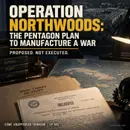
Operation Northwoods: The Pentagon’s 1962 Plan to Manufacture a Pretext for War with Cuba Operation Northwoods and government conspiracy meet in a 1962 Pentagon proposal for manufacturing a pretext for U.S. intervention in Cuba. We examine the staged-incident scenarios sent to Defense Secretary Robert McNamara, the plan’s post–Bay of Pigs context, and President Kennedy’s pushback. The proposal was not carried out—and the episode separates what the declassified record shows from what it does not. https://SomeUnapprovedThinking.com/s1e91 Sponsor - https://DarkHorseEntrepreneur.com


Operation Northwoods: The Pentagon’s 1962 Plan to Manufacture a Pretext for War with Cuba
Operation Northwoods and government conspiracy meet in a 1962 Pentagon proposal for manufacturing a pretext for U.S. intervention in Cuba. We examine the staged-incident scenarios sent to Defense Secretary Robert McNamara, the plan’s post–Bay of Pigs context, and President Kennedy’s pushback. The proposal was not carried out—and the episode separates what the declassified record shows from what it does not.
Open the Free Northwoods Source Dossier
https://SomeUnapprovedThinking.com/s1e91 Get the Northwoods Dossier here too
Sponsor - https://DarkHorseEntrepreneur.com
The script examines a March 13, 1962 memorandum signed by Joint Chiefs Chairman General Lyman Lemnitzer and sent to Defense Secretary Robert McNamara proposing “pretexts” to justify U.S. military intervention in Cuba, including staged incidents and potential real violence designed to make Cuba appear responsible and to generate public and international support. It situates Northwoods within post–Bay of Pigs pressure and Operation Mongoose, highlights proposals involving Guantanamo provocations, a “Remember the Maine” ship incident, casualty lists meant to spark a “helpful wave of national indignation,” terror scenarios targeting Cuban refugees, and deceptive aviation shootdown narratives engineered for independent-sounding confirmation. The script stresses the plan was not executed, notes Kennedy’s March 16, 1962 pushback against using U.S. force, addresses limits of what the record proves, and explains the document’s later public release via archival processes.
00:00 Pentagon Line That Chills
01:26 What Northwoods Was
02:58 Bay of Pigs Fallout
04:04 Pretext Becomes Policy
05:08 Guantanamo Staged Attacks
06:07 Helpful Wave of Outrage
07:48 Terror Campaign Proposals
09:38 The Airliner Switcheroo
11:44 Sincere Witnesses Trap
13:30 What Actually Happened
16:08 Document Goes Public
17:23 Lesson and Final Warning
operation northwoods, false flag operations, declassified documents, JFK, bay of pigs, cuba, castro, operation mongoose, joint chiefs of staff, lyman lemnitzer, john f kennedy, cuba invasion, false flag proposal, operation mongoose, declassified history, government conspiracy, false flag, Conpiracy, conspiracies, conspiracy history, conspiracy theories, conspiracy theory, hidden conspiracy, historical context, media conspiracy, conspiracy, hidden history, controversial, revisionist history, conspiracies, hidden narratives, historical patterns, forbidden ideas, cultural conditioning, hidden conspiracy, conspiracy theory, historical conspiracies, hidden insights, conspiracy theories, hidden patterns, conspiracy history, history untold stories, forbidden history, human behavior, hidden past, historical insight, untold history, history conspiracy, patterns of history
https://SomeUnapprovedThinking.com
Hosted by Simplecast, an AdsWizz company. See pcm.adswizz.com for information about our collection and use of personal data for advertising.
[00:00:00] Tracy Brinkmann: There's a sentence in a Pentagon document that really should stop you cold. Not because [00:00:05] somebody claims to remember it, not because some guy out there online says his uncle knew a [00:00:10] guy that knew a guy that saw it, but because you could actually read it for yourself. The [00:00:15] sentence says, "Casualty lists in U.S.
[00:00:17] newspapers would cause a helpful [00:00:20] wave of national indignation." Let that sit for a second. A helpful wave. [00:00:25] That's how the writers of that sentence describe the public's anger over a proposed [00:00:30] attack. But in this particular scenario, the crew would not exist. The deaths would just be a [00:00:35] story, and the anger would still be real.
[00:00:37] The document was addressed to the Secretary of [00:00:40] Defense in March of 1962. Its purpose was to propose ways to [00:00:45] justify an American invasion of Cuba. It was not carried out as Operation [00:00:50] Northwoods. I want you to keep that distinction in your pocket because we're gonna need it a little bit later. Because the [00:00:55] question isn't just whether this plan happened or not, it's how manufacturing [00:01:00] a reason for war became something the Joint Chiefs of Staff were willing to put [00:01:05] in writing.
[00:01:05] And that, my friends, calls for some unapproved thinking.
[00:01:08] Bumper Lady: Beneath the headlines, [00:01:10] behind the timelines, there is a story no one wants you to find. Welcome to [00:01:15] Some Unapproved Thinking, where forgotten truths, buried patterns, and [00:01:20] invisible systems rise to the surface. You weren't crazy. You were just early.[00:01:25]
[00:01:25] Let's begin
[00:01:26] Tracy Brinkmann: March 13th, 1962, a [00:01:30] memorandum is addressed to the Secretary of Defense, Robert McNamara. The subject is [00:01:35] justification for US military intervention in Cuba. It's signed by General Lyman [00:01:40] Lemnitzer, Chairman of the Joint Chiefs of Staff. Not a disgruntled junior officer doodling [00:01:45] a nightmare during, uh, some boring meeting somewhere.
[00:01:48] No, the chairman [00:01:50] writing for the Joint Chiefs of Staffs. I want you to remember that. The package contains a list of [00:01:55] possible incidents. Some would be staged. Some would cause real harm. [00:02:00] They would all make Cuba appear responsible for the aggression and help create support for [00:02:05] American military action.
[00:02:06] That's the core of Northwoods. Now, the paperwork [00:02:10] also calls these proposals a preliminary submission for planning purposes. Individual [00:02:15] projects would need further consideration, and that matters. Don't get me wrong. I want you to stick with me [00:02:20] here. The proposal is not an order to execute. Approved by the Joint Chiefs of Staff [00:02:25] isn't the same as authorization by the president, and don't let those distinctions turn [00:02:30] into some sleeping pill to, to let you just let it go by the wayside.
[00:02:33] These weren't ideas [00:02:35] being listed so somebody could explain how to defend against them. The chiefs recommended [00:02:40] sending them forward. The signed cover memo also recommended that responsibility for developing [00:02:45] the military side of the larger plan go to the joint chiefs. So let's put [00:02:50] this in plain English, shall we?
[00:02:51] Here are the possibilities, and we think we should run that [00:02:55] part. Okay? So let's answer this question: how did we get to that desk? Well, for that, we're [00:03:00] gonna have to go backwards 11 more months to another plan that was supposed to [00:03:05] remove Fidel Castro, but it didn't. It was April 1961, the Bay of [00:03:10] Pigs. So many of us have heard this.
[00:03:11] The CIA-backed force of Cuban exiles lands in [00:03:15] Cuba. The invasion fails. Castro remains in power. The Kennedy administration takes a [00:03:20] very public beating. Yeah, right? Of course. The Cold War isn't an [00:03:25] abstract argument at this point. Washington sees a government closely aligned with the Soviet [00:03:30] Union just off the American coast.
[00:03:32] That fear was real. So were the people living [00:03:35] under Castro's government. Neither fact makes the proposal we're about to examine [00:03:40] acceptable. It helps explain the pressure around that proposal. By November [00:03:45] of 1961, the administration decides to pursue a new covert campaign, [00:03:50] Operation Mongoose. Political pressure Propaganda, intelligence gathering, [00:03:55] sabotage, support for the opposition to Castro.
[00:03:58] The aim here is to [00:04:00] still remove him. Northwoods emerges inside that larger effort. And [00:04:05] here's where a very important word appears, pretext. Yeah, it's a simple word. [00:04:10] The Cuba Project's Chief of Operations, Edward Lansdale, had asked for [00:04:15] descriptions of pretexts that could justify US military intervention.
[00:04:19] Not as [00:04:20] simply a plan for what to do if America was attacked. A request for circumstances that [00:04:25] could provide a justification for intervention. And the reply goes further. It [00:04:30] describes circumstances the United States, wait for it, could actually help [00:04:35] create. Yeah, I want, I wanna let that one just sit and mull around in your head for a second, because that, [00:04:40] my friends, is the turn in the road.
[00:04:41] You can have a serious argument about whether a government [00:04:45] poses a threat. Yes, you can have a serious argument about whether force is justified. [00:04:50] Also, yes. But if you manufacture the evidence that settles the argument, you [00:04:55] are no longer asking the public to make a judgment. No. You are arranging that [00:05:00] judgment for them.
[00:05:01] You're making it for them, and the public doesn't get to know that that was the [00:05:05] assignment that they were supposed to sign up for. Yeah. Stick with me. The first set of examples [00:05:10] centers on the American naval base at Guantanamo Bay. The annex proposes [00:05:15] incidents that would have the appearance of attacks by hostile Cuban forces, rumors, [00:05:20] staged disturbances, friendly Cubans made to look like attackers, damage to [00:05:25] American facilities.
[00:05:25] Then what would happen? Well, of course, American forces would respond. I want you to [00:05:30] notice the order there. The appearance of an attack would help justify a [00:05:35] military response, and the people watching from the outside would not be told they were seeing the [00:05:40] opening act of something that was planned. One suggestion includes funerals of, wait [00:05:45] for it, mock victims.
[00:05:46] That's the document's actual phrase, "mock-" [00:05:50] victims. Think about what a funeral means to the people watching it. Loss, duty, a family that [00:05:55] will never be the same again. The proposal treats that meaning as something that can be staged [00:06:00] to support the next move. This isn't about making an enemy look dangerous.
[00:06:04] It's about [00:06:05] borrowing the moral weight of grief. The next section proposes a, quote, [00:06:10] "Remember the Maine incident." Yeah. That's a reference to an earlier American ship [00:06:15] disaster and a slogan associated with the Spanish-American War. Go look it up if you don't know what I'm talking about [00:06:20] here. We don't need to settle history of that explosion to understand what the [00:06:25] Northwoods writers wanted from that reference to that previous ship disaster.
[00:06:29] An [00:06:30] event that could rally people, that's what they wanted. An option in the memo is blunt. [00:06:35] Blow up a US ship in Guantanamo Bay and blame Cuba, period. Hard stop. Another [00:06:40] uses an unmanned vessel and a nonexistent crew, and that's where we get the line from the [00:06:45] opening that I mentioned earlier as we inter- introduced this episode.
[00:06:48] Casualty lists in [00:06:50] US newspapers would cause a helpful wave of national indignation. Let [00:06:55] that sit for a moment, would you? Yeah. They were not simply predicting that Americans would get pissed [00:07:00] off or get angry. They were considering how to produce the event, the apparent [00:07:05] victims, and the very information that would make that anger politically useful.
[00:07:09] Yeah. [00:07:10] Y- feel, you feel me? And th- this was back in the '60s. The newspapers would not [00:07:15] have to be knowingly involved. Readers would not have to be gullible. People could [00:07:20] just respond with perfectly sincere compassion to something whose basic [00:07:25] story had been engineered, period. And that's why dismissing this as a plan to fool stupid [00:07:30] people, I think it just misses the point.
[00:07:32] It was a plan to exploit decent [00:07:35] instincts from decent people. Right at this stage, I can hear some of you in my magic [00:07:40] headphones here. You might be thinking, appalling. Well, yes, but at least these examples [00:07:45] involved fake casualties. Keep listening here. We're not done yet. The next proposal [00:07:50] describes a, quote, "Communist Cuban terror campaign," unquote, in Miami or [00:07:55] in other Florida cities, and even in Washington.
[00:07:57] It talks about targeting Cuban [00:08:00] refugees, people who were seeking safety here in our great country of the United States of America. One [00:08:05] sentence proposes sinking a boatload of Cubans heading for Florida, followed by the [00:08:10] words, quote, "Real or simulated," unquote.
[00:08:13] Bumper Lady: Yeah,
[00:08:13] Tracy Brinkmann: let that one sit. [00:08:15] Real or simulated. Those words belong in the same telling of the story, if I'm [00:08:20] completely honest, 'cause if you leave out real, then you kinda clean up the story.
[00:08:23] If you leave out simulated, [00:08:25] well, then you misrepresent exactly what was written in the document. The document also [00:08:30] discusses attempts on fugitive lives, including wounding people in incidents [00:08:35] that would receive wide publicity. So no, this wasn't a harmless exercise [00:08:40] in special effects. The menu included possible real violence [00:08:45] alongside deception.
[00:08:46] It also considered preparing documents that would appear to establish Cuban [00:08:50] involvement, and that detail matters almost as much as the proposed incidents [00:08:55] themselves. Because after an attack, people are going to ask for evidence, of course. [00:09:00] These planners were thinking about what evidence those people might be shown, what would appear [00:09:05] to connect the event to the enemy that they had chosen.
[00:09:08] This one really is [00:09:10] disgusting because it's a horrible inversion of an investigation. Normally, you begin with [00:09:15] what happened and follow the evidence toward whoever did it. Here, however, you begin [00:09:20] with who you want to blame, and then you work backwards. And look at who gets reduced to a [00:09:25] prop in the process of this whole thing.
[00:09:27] Refugees who might have fled Castro could be [00:09:30] harmed to help make the case against Castro. If your defense of freedom needs that [00:09:35] sentence, something has gone horribly wrong in the process. Then comes one of the [00:09:40] most discussed sections in this document, a proposed incident involving a [00:09:45] civilian airliner.
[00:09:46] Man, I'm serious here. This is documented stuff. The scenario would make it [00:09:50] appear that a Cuban aircraft had shot down A charter flight. The passengers could [00:09:55] appear to be a group of college students away on holiday. But the proposal describes a [00:10:00] switch involving two aircraft. The passenger-carrying airplane would land [00:10:05] safely on a US airfield, and an unmanned aircraft would continue the apparent [00:10:10] flight.
[00:10:10] The false distress message and the destruction of that aircraft would create the [00:10:15] appearance of a Cuban attack. Let me put a fence around that f- for a moment, would you? This particular [00:10:20] scenario does not describe killing a plane full of students. It describes [00:10:25] making the world believe a civilian flight had been attacked while the selected [00:10:30] passengers had been taken away somewhere safe.
[00:10:32] That correction does not rescue the proposal at all. [00:10:35] It doesn't remove any disgust. It just tells us what kind of deception was being [00:10:40] considered. And the final detail is one I, I, I find particularly revealing. [00:10:45] The planners wanted other radio stations to pick up the distress message from the airplane. [00:10:50] The memo says this would allow those radio stations to tell the United States what [00:10:55] happened rather than the United States government having to sell, he says with air quotes, the [00:11:00] incident.
[00:11:00] Let that one sit. I'm saying that one a lot in this episode because there's some moments in here where you just have to [00:11:05] go, "Oh my God, someone was actually considering this." The story would seem to arrive from the [00:11:10] outside, not some claim from the ivory tower in Washington, DC. [00:11:15] Something other people would have heard on the radio.
[00:11:17] That feels more like independent confirmation, doesn't it? [00:11:20] Except those people would be hearing a signal created for the purpose of misleading [00:11:25] them. Their honesty wouldn't fix the false premise. They could [00:11:30] accurately report what they heard because they heard it and still help spread a lie about what [00:11:35] happened.
[00:11:35] There's a difference between an independent witness and an independent explanation, isn't there? [00:11:40] Yeah. This proposal was built to take advantage of that very difference. [00:11:45] Another aviation scenario makes that point even clearer. Let me tell you about that one. It [00:11:50] proposes creating the appearance that Cuban aircraft had destroyed an American [00:11:55] military aircraft.
[00:11:56] The selected pilot would actually return safely. Other pilots [00:12:00] would not have the full picture. Okay, stick with me here. The memo describes [00:12:05] those returning pilots as having a true story as far as they knew Yeah, [00:12:10] as far as they knew. That is not a throwaway phrase here. It's the difference between needing [00:12:15] everyone to lie and arranging things in a, in a way so some people [00:12:20] honestly repeat their incomplete account of the events as they unfolded.
[00:12:24] Think of the [00:12:25] conversation that would come afterward. Someone says, "A pilot went down." Someone else would say, "Well, there were other [00:12:30] pilots there, too." And that's true. They were there, but being there would not [00:12:35] mean that they knew everything had been arranged. I'm describing the logic of a proposal, [00:12:40] not of an event that actually occurred, and that logic, I think, is really worth us all understanding [00:12:45] Because people often imagine a large deception requiring every participant to [00:12:50] know the entire secret.
[00:12:51] This very memo shows planners considering something far [00:12:55] narrower. A few people, yes, would know that something was staged. The others, [00:13:00] they would only know their part, and they wouldn't even know about the staging. Still others would have countered the apparent [00:13:05] evidence afterwards. The staged evidence.
[00:13:07] Bumper Lady: Yeah,
[00:13:07] Tracy Brinkmann: you feel me?
[00:13:08] Okay. The result could look [00:13:10] stronger precisely because some of the people telling the story were sincere, and they [00:13:15] would be because this is what happened to me. This is what I saw. As far as I know, the rest is true. [00:13:20] I, I don't have to invent that as a reading. The phrase is sitting there on the page, [00:13:25] quote, "As far as they knew," unquote.
[00:13:27] Hard stop. I don't have to invent that. It's, it's [00:13:30] in black and white. Now, here's, here's the part where we reach the point where a lot of retellings [00:13:35] either go soft or run straight off the conspiratorial road. What happened to [00:13:40] Operation Northwoods? Well, the proposals were not implemented as Operation Northwoods.
[00:13:44] The [00:13:45] signed memorandum proves that senior military endorsement of forwarding them. That, that's [00:13:50] not in question. It does not prove a presidential order was executed to carry them [00:13:55] out. You feel me? Okay. And there's a contemporary record from three days later that helps us [00:14:00] understand the boundary around any military intervention.
[00:14:03] March 16th, [00:14:05] 1962, Kennedy meets with senior officials around the Cuba effort. Lansdale writes an [00:14:10] account of that meeting. According to that account, Lemnitzer mentions [00:14:15] contingency plans for U.S. intervention, including plans for creating plausible [00:14:20] pretexts to use force. Remember that word I mentioned earlier?
[00:14:23] Kennedy responds bluntly that they are [00:14:25] not discussing the use of U.S. military force. Lansdale also records [00:14:30] Kennedy pointing to the possibility that American forces could be tied up in Berlin [00:14:35] or elsewhere. So we have evidence of a president pushing back on military intervention in that [00:14:40] discussion. What we do not have in the record is a movie scene where Kennedy reads [00:14:45] every Northwoods scenario out loud, slams the folder down, throwing papers across the room, and [00:14:50] delivering a speech about saving the Republic Please, as a bystander, do not add a [00:14:55] better scene than the source material gives you.
[00:14:57] Uh, that just leans into the wrong thing. The [00:15:00] administration continued other covert, uh, efforts against Castro. Yes, rejecting [00:15:05] or not authorizing this particular proposal does not turn the entire Cuba [00:15:10] campaign into a neat, clean story all wrapped up in a bow, and the existence of Northwoods [00:15:15] doesn't prove later claims about Kennedy's assassination either.
[00:15:18] That's a separate question [00:15:20] requiring entirely separate evidence. And, and let me give you another wrinkle. When the plans became [00:15:25] public decades later, The Guardian reported that McNamara denied seeing them. The [00:15:30] signed memo doesn't vanish because he denied seeing that memo, but the signature also does not [00:15:35] establish what McNamara personally read or personally authorized, and that's where [00:15:40] we have to leave that disagreement.
[00:15:42] We don't get to fill in with another scene that we cannot [00:15:45] verify. The honest conclusion, I think, is uncomfortable enough. Senior officials [00:15:50] proposed manufactured provocations. Their chairman signed a recommendation [00:15:55] addressed to the Secretary of Defense. It, it did not become an executed Northwoods operation.
[00:15:59] Not [00:16:00] executed is not the same as not serious, and serious is not the same [00:16:05] as executed, and we need both of those sentences here. The people whose anger appear [00:16:10] in these calculations didn't get to review the paperwork in 1962. The document [00:16:15] remained outside public view for decades. The National Security Archive traces [00:16:20] its eventual public emergence through the Kennedy Assassination Records Review Board's opening of [00:16:25] the records, uh, back in the '90s.
[00:16:26] Author James Bamford obtained a copy and shared it [00:16:30] with the archive, which in turn published it online in 2001, and that's an important part of this [00:16:35] story W- what we're examining isn't some secret clandestine recording [00:16:40] with an unknown chain of custody here. No, it's a government document preserved in the [00:16:45] record and made available for people to inspect.
[00:16:47] You, you can go inspect it. You can check the [00:16:50] signature. You can check the proposal language. You can check the sentences that sound way [00:16:55] too ugly to be real, and you can also check the limits. The cover memo calls it a [00:17:00] preliminary planning. The annex lists possible courses of action. There is no [00:17:05] honest reason to hide those qualifications from you, and that's not what I'm here to do.
[00:17:09] If the [00:17:10] evidence is strong, it doesn't need us to make it stronger by changing what it says. It's awful [00:17:15] enough in and of itself, and if someone tells you the qualifications ruin the story, well, [00:17:20] then you need to ask what story they're trying to sell you, right? Okay. Now, here's what I keep coming [00:17:25] back to.
[00:17:25] Northwoods was not only about deceiving Cuba. The proposed [00:17:30] deception was meant to shape opinion beyond Cuba, including here in the United States of [00:17:35] America. The document talks about world opinion. It talks about the United Nations. [00:17:40] It talks about newspaper readers becoming indignant and pissed off. The [00:17:45] intended audience was part of the very mechanism they were trying to activate.
[00:17:49] You didn't [00:17:50] need to be silenced Right? You didn't need to vote. You needed to be persuaded by a [00:17:55] situation you were not allowed to even understand, and once you were persuaded, you might [00:18:00] demand the very response that those planners already wanted. That's my reading of the mechanism [00:18:05] laid out on those pages.
[00:18:06] Not that public anger is always manufactured, not that every attack [00:18:10] is staged, not that every person who warned you about a threat is lying. Those claims, [00:18:15] again, would need much larger evidence. I think the lesson here is much [00:18:20] narrower and much more useful. The government can contain people willing to [00:18:25] manufacture a threat narrative.
[00:18:27] The documents establish that very willingness. [00:18:30] Each alleged event still needs its own proof. Please do not go off on a [00:18:35] banty willy gig because this one scenario proves it's possible. Norsewoods doesn't give us [00:18:40] permission to stop checking. It gives us a reason to check more [00:18:45] carefully, including the stories that we would like to have be true.
[00:18:48] Otherwise, we [00:18:50] haven't escaped the manipulation, have we? No, we've just become a different audience for [00:18:55] it. We've become indifferent to it, and that's swinging the pendulum the, the other way. And look here, don't take [00:19:00] my word for what is in those pages. For the free Norsewoods, uh, source dossier I put together, [00:19:05] go ahead and go to someunapprovedthinking.com/s, as in Sam, [00:19:10] 1, the number one, e, as in episode, 91, S1E91.
[00:19:14] I'll, I'll put [00:19:15] the link down in the description so you can just click and get right there. You're gonna find the original memo, a guide to [00:19:20] the key passages that I'm talking about here, and a checklist for separating what the document [00:19:25] proves from what somebody claims it proves. Read it. Check me. Email me if you think I, I [00:19:30] got something wrong.
[00:19:30] I, I'm providing it for you to prove what I'm saying here. And if you wanna keep [00:19:35] explaining how the case for war gets built, go, go back and listen to episode [00:19:40] 82. That's our Pearl Harbor episode. I think that episode explores more disputed claims. [00:19:45] Norsewoods doesn't settle them. Take the same question with you.
[00:19:48] What does a document [00:19:50] actually establish, and what is it that we ourselves, or maybe other people out there [00:19:55] influencing us, are adding to it? The link's down in the description alongside the Norsewoods memorandum and the other [00:20:00] sources that are from this episode. Okay? Now, let's go back to the people reading those [00:20:05] proposed casualty lists.
[00:20:06] They would think they were honoring the dead. They would think they were standing [00:20:10] up for their country if they acted out on this, uh, plan. In an unmanned ship scenario [00:20:15] There wouldn't be a crew to mourn, but there could have been a war to fight. [00:20:20] A real war could have been fought, and that makes the phrase a little harder to shake, if you ask me.
[00:20:24] [00:20:25] A helpful wave of national indignation. Helpful to whom? That's the real [00:20:30] question, right? Yeah. Not the public being asked to make a decision without the truth. Certainly not the [00:20:35] people who might pay for that decision. And the, the plan luckily didn't happen. The [00:20:40] willingness to propose it did happen, and it's documented.
[00:20:43] So I want you to... I, I wanna [00:20:45] leave you with this. The next time that somebody hands you a reason to be afraid or a [00:20:50] reason to be pissed off and furious and, and upset, I want you to remember, those are [00:20:55] not reasons to surrender your judgment and your critical thinking. They [00:21:00] are and will be the very reasons you need to protect it.
[00:21:03] And those, my friends, [00:21:05] are real reasons for some unapproved thinking. Tracy out.
[00:21:09] Bumper Lady: If this story [00:21:10] didn't sit right with you, good. You're not here to be comforted. You're here to see what [00:21:15] others overlook. Thanks for exploring some unapproved thinking. Learn more at [00:21:20] someunapprovedthinking.com. New episodes drop weekly.
[00:21:24] [00:21:25] Subscribe, share, and keep questioning because the pattern's still playing out, and [00:21:30] next time we're going [00:21:35] [00:21:40] deeper.